A German Dream in Essaouira…
They had travelled far, Horst Tüselmann and his life partner Werner Groothuis, across countries and continents, through the thousand faces of the world and the thousand voices of its people, until one day, in Essaouira, beside the Atlantic where the wind comes salt-laden and the light falls differently upon the white walls, they found themselves at home. It was the colours, perhaps, or the slow unhurried rhythm of life, the old town breathing in the sea air, the blue doors, the sun-warmed stone, the mingling of worlds that had lived beside one another for centuries. Whatever it was, Essaouira had entered their hearts and was not to leave.
In 2006, retirement brought not an ending but the beginning of another dream. Horst bought a piece of land and began to build, stone by stone, the house he had imagined: a place where the warmth of Moroccan tradition might meet the clarity of European design, where neither would lose itself in the other, but where both might find a new language. For this, he turned to Wolfgang Meisenheimer, an architect, professor and friend from his student days, a man with whom ideas could be shared, questioned and given form.
In those days, this part of Essaouira belonged to its local people; no foreigner had yet made a home here. Today, the neighbourhood tells a different story, with more foreign residents than locals, and the first chapter of that change began with this house.
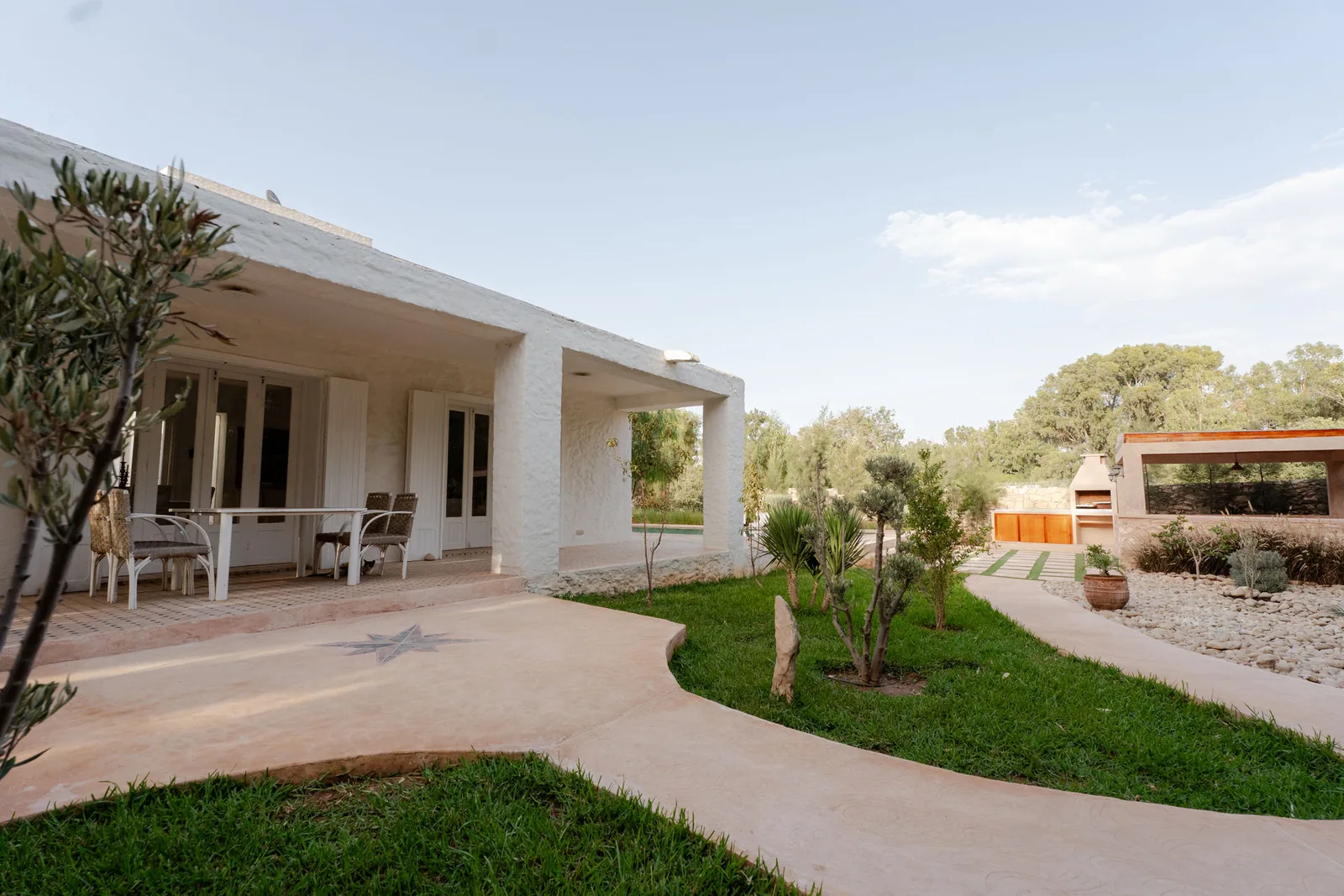
Built by local hands, from local materials, its walls raised from the stones of the land, its furniture made for the rooms it would inhabit, the house grew not apart from its surroundings but out of them. Within it, paintings and sculptures found their places, the work of the Moroccan artist Ali Maimoun, whose art brought another voice into the conversation. Nothing here needed to stand alone. Everything belonged to something else: a material to a hand, a room to the light, a house to the place that had given it life.
And so the house came to stand between two worlds, though perhaps there had never been two worlds at all, only different ways of seeing the same things. Berber traditions and European ideas met in the rooms and stairways, in the patio open to the sky, in the terraces and garden where the boundary between inside and outside slowly disappeared.
The architecture unfolds in horizontal and vertical lines, through rooms, stairs, the inner courtyard, terraces and garden. There is something almost monumental in its spaces, yet they remain open to the light. Morning light enters, moves across the walls, lingers on the objects, then slips away, only to return by another window in the afternoon. Daylight, fresh air, sun and wind pass through the house, creating the curious feeling of being outdoors while remaining protected indoors. The original pieces of art and the colours give the space its character, while the straightforward design brings a quiet beauty of its own. For a moment, the everyday world seems to fall away, leaving you alone with the sun and the wind. And always the sea wind, somewhere near, making its presence felt even when the ocean itself remains unseen.
The Hands and Minds Behind the House
Horst Tüselmann's eye had been trained by years of looking, making, and discovering what light could do to a material. After studying art and design, he worked for many years as a glass designer, particularly with the German glassworks Peill & Putzler and Ichendorf Glashütte. Glass, that curious meeting of solidity and transparency, of matter and light, was a fitting companion to the way he imagined a home. His artistic work is represented in the Museum of Modern Art in New York, a lasting testament to a life shaped by design and the quiet pursuit of beauty.
Wolfgang Meisenheimer, architect, university professor and founder and co-editor of the architecture magazine Daidalos, brought another kind of vision to the dream: the discipline of space, the intelligence of structure, the understanding that a house is not merely walls and rooms but the life that unfolds between them.
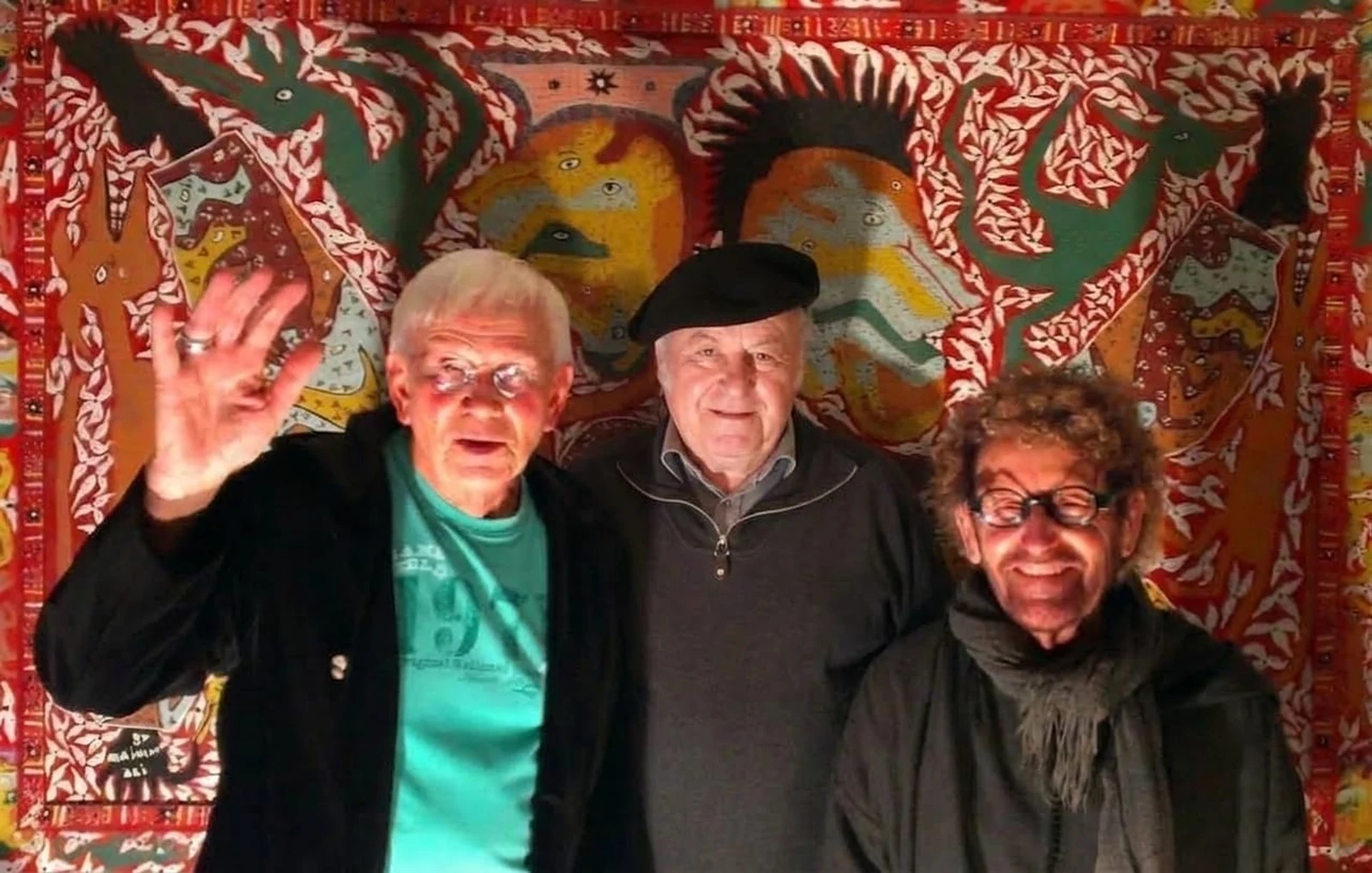
Together, their ideas gave the house its character, while the hands that built it gave those ideas their substance.
A Friendship, Another Chapter
I first came to know Horst and Werner in 2013. What began by chance grew slowly, as the best things often do, into a friendship that became something closer to family. There are relationships that arrive without announcement, that ask for nothing at first and, over the years, become part of the way one understands home. This was one of them.
In 2017, I began looking after the house. By 2019, it had become mine. And with it came more than walls, rooms, a garden and a history. There was a trust to honour, a spirit to preserve, a living dream to carry forward. I cared for it as one cares for a friendship, not by keeping everything as it was, but by understanding what must remain and what, with time, can become something more.
Room by room, corner by corner, the house has been renewed. A more contemporary touch, a deeper sense of comfort, small changes that make a difference without asking the original architecture to become something it was never meant to be. The old spirit remains, not untouched, but understood. Outside, the garden has been transformed, its former simplicity giving way to a richer landscape of green, pathways and places to linger.
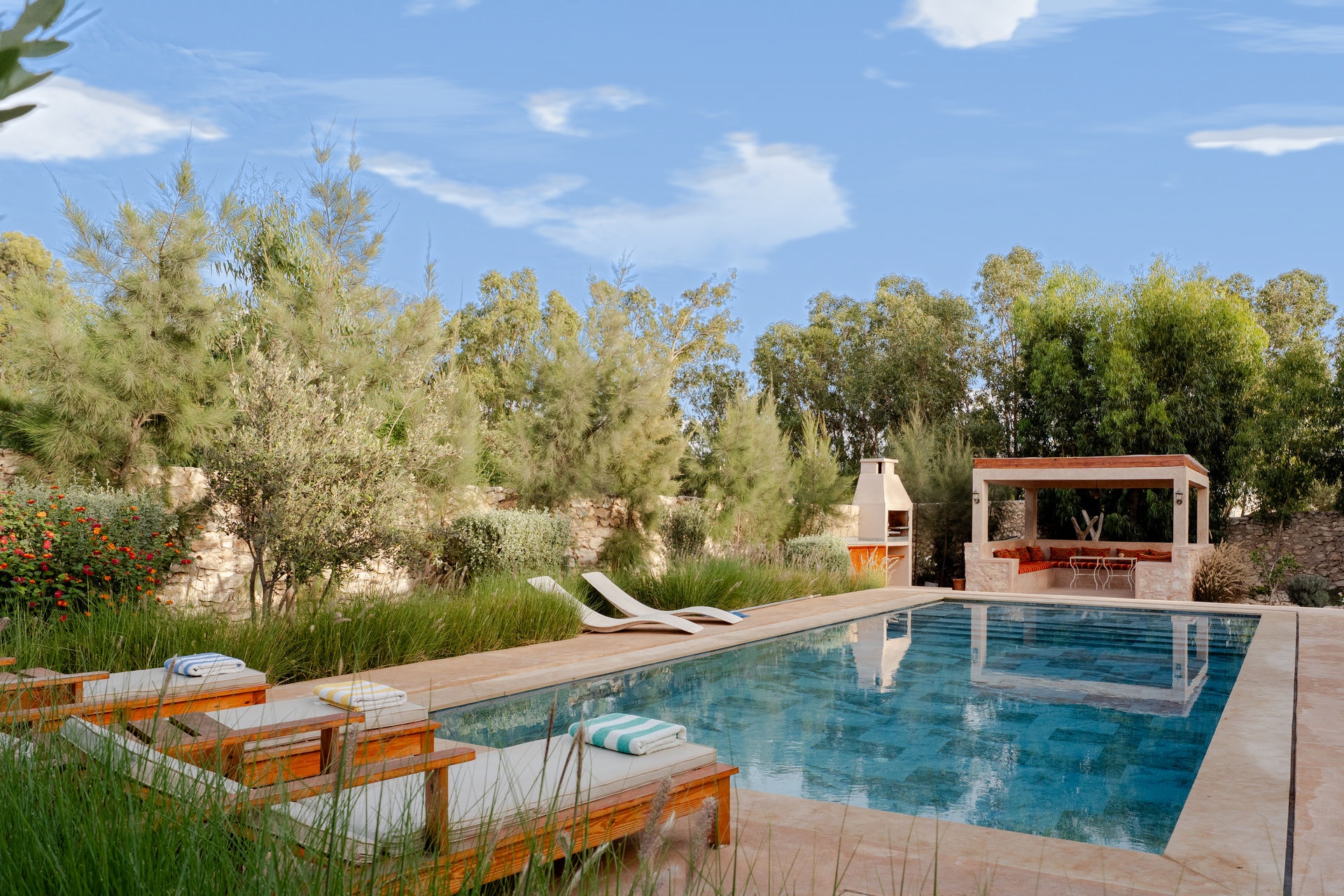
The pool, ten metres by four and a half, lies in the garden, its blue water holding the sky like a polished mirror. Around it spreads a broad terrace, bright and open to the sun, where loungers invite you to rest and a low coffee table waits for morning espresso, mint tea, or a long afternoon with a book. The water reflects the passing clouds as though the Atlantic had left a small piece of itself here, among the leaves and the stone.
Facing the pool stands a pergola, its lattice laying a patterned shade over a generous table made for slow breakfasts, lazy brunches and long dinners shared with those you love. Beside it, the barbecue is ready for the evening, when the scent of grilled food drifts across the garden and the day begins to wind down. Olive and eucalyptus trees rise around the garden, their leaves whispering in the breeze and lending the outdoor space a sense of privacy. Here, you may swim, bask in the sun, dine beneath the pergola, or do nothing at all.
There is always something more to do, some detail to improve, some new thought waiting for its moment. Each year the house changes a little, becomes a little more itself, ready once again to welcome those who arrive from elsewhere, carrying their own stories, their own need for rest, for sunlight, for the sound of the wind moving through the garden.
The Comforts of Home
And while the house invites you to slow down, the little things that make a stay comfortable need not be forgotten. The housekeeper takes care of the daily washing-up, the beds and the needs of the household, opens the shutters onto the garden in the morning, letting the day enter gently, and prepares meals on request.
Wood for the two fireplaces is always available for cooler evenings. And if the moment calls for music, the sound system is ready, whether you prefer Eric Clapton, Mozart, or simply the quiet sounds of the house around you.
Essaouira and Beyond
And then there is Essaouira itself, waiting just beyond the quiet of the house. Its cafés and restaurants, galleries and souks, fish market, harbour and beach offer a different rhythm, the lively pulse of a city shaped by the sea, its colours and its many voices. There is always another street to wander, another small discovery to make, another reason to stay a little longer.
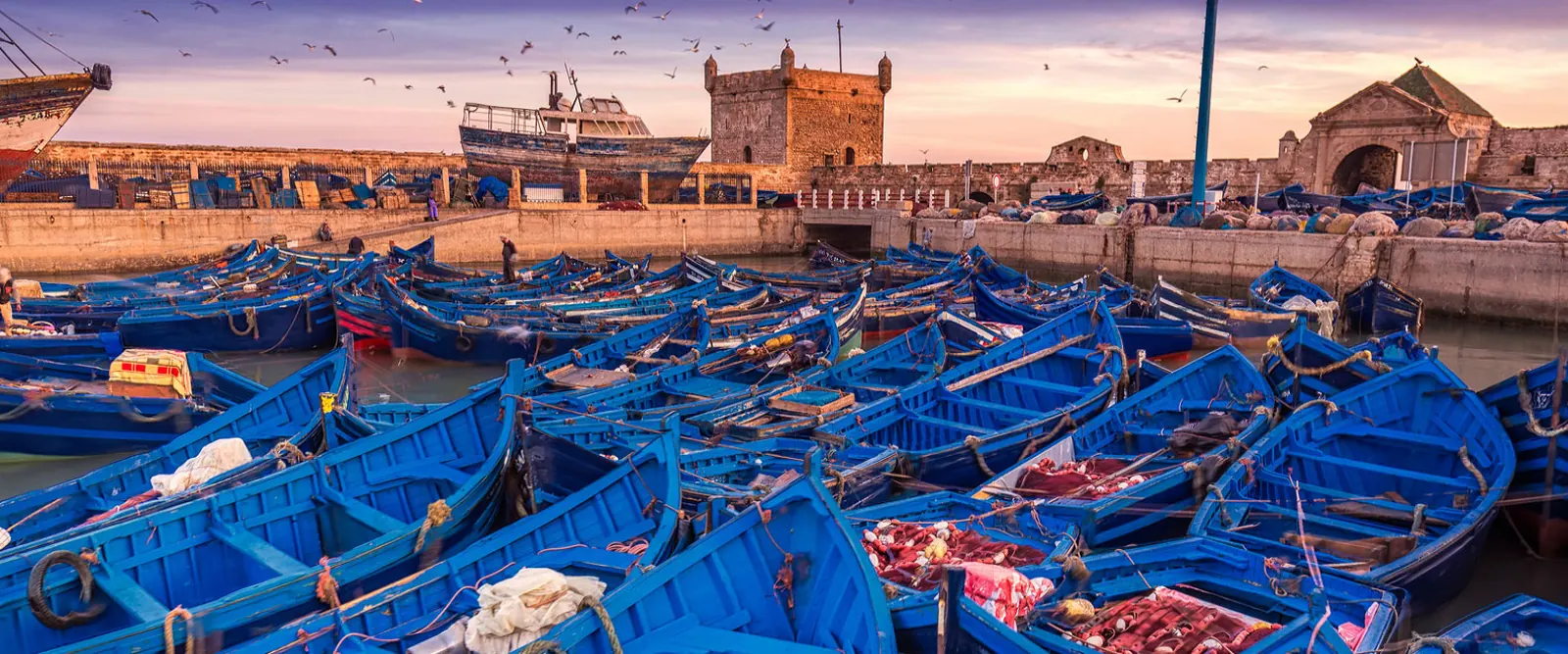
And beyond the city, there is still more to discover: the mountains, the small villages, the Berber markets, the endless Atlantic coast and the traditional art of making argan oil. The Morocco that waits beyond the familiar, with its landscapes, its people and its unhurried moments, invites you to explore at your own pace.
So, come and enjoy the real Morocco, breathe in the special charm of living here, and let the sun and the wind remind you how good it can feel simply to be.
Perhaps this is what a house truly is: not something finished, but something carried forward, from one pair of hands to another, from one chapter of a life into the next. Horst's dream, shaped by Moroccan hands and European imagination, became a home; friendship gave it another chapter; and time continues to write the rest.
Two chapters, one spirit. A house born of a German dream in Essaouira, built by local hands, preserved through friendship, and left open to light, air and silence.